What else is there to do in Xochimilco
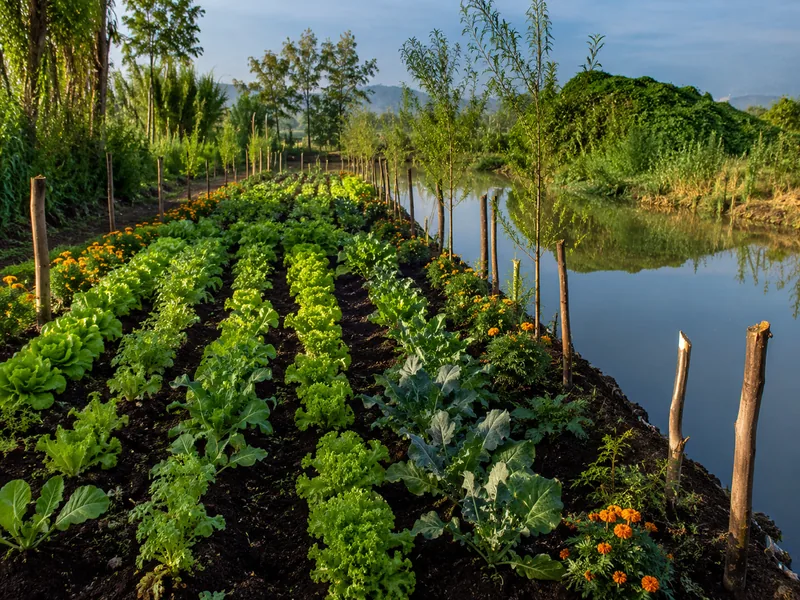
The chinampas, and why they are not floating
A chinampa is an artificial cultivation platform raised from lakebed mud, separated from the next one by a canal and edged with ahuejote willows (Salix bonplandiana) whose roots hold the bank together. It is anchored to the lakebed. “Floating gardens” is the tourist name, not the mechanism, and once you know that, the whole landscape reads differently from the boat: those are fields, with owners, and the canals between them are the road network.
The FAO recognized the system as a Globally Important Agricultural Heritage System in 2017. Its figures, published on 23 December 2019 and now six years old, are the best inventory anyone has:
- About 20,922 chinampas identified, of which 3,586 were actively producing — roughly 17%.
- 2,215 hectares across five zones, with 418 hectares of open-air cultivation.
- 19,213 tonnes of food a year, worth 245 million pesos: lettuce 7,453 t, verdolaga 3,334 t, romerito 3,132 t, chard 1,352 t.
- 23 to 24 million ornamental plants a year.
For scale: the chinampa landscape covered something like 20,000 hectares in the 15th century against roughly 2,037 today. On age, I will give you the defensible version rather than the confident one. Chinampa agriculture is archaeologically documented from the Postclassic and was intensively developed under Aztec rule; Frederick, writing for Springer in 2007, states that claims extending it into earlier periods are unsupported by direct field evidence. Any page giving you a founding century is going beyond what has been dug up.
Food, drink and music on the water
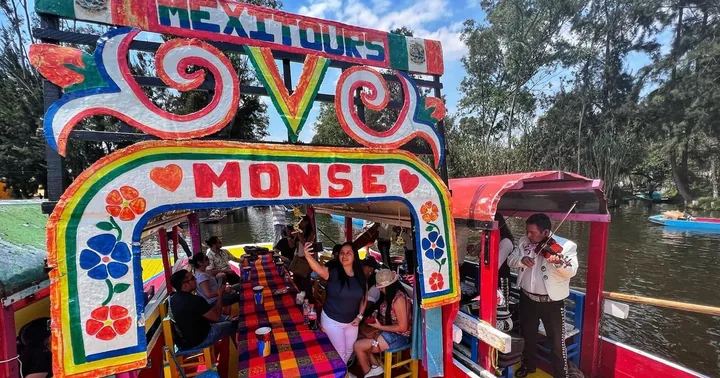
You do not go looking for lunch; it comes alongside. Smaller boats work the canals selling antojitos, and the same 2024 tariff act that set the boat rate also set MX$130 for antojitos and MX$300 per mariachi song, up from MX$220. Those figures are reported from the act rather than read off a government page, so treat them as the published tariff and agree the number before the trumpet starts.
Two rules worth carrying with you:
Your rights aboard
- You may bring your own food and drink aboard at no surcharge
- The tariff for the boat is per boat, per hour — not per person
- Both of those are reportable at the attention modules at the docks
What you should refuse
- Being charged extra for bringing your own food and drink — a documented scam
- Any per-person quote for the boat itself — a breach of the official tariff
- Radios, speakers and generators: the 2020 rules keep passenger sound systems off the boat, and only the operator’s own system is allowed
On alcohol, two things that both need saying and should not be run together. The 2020 rules limit what passengers bring aboard to one bottle of up to a litre of spirits per boat, or a maximum of three 355 ml beers per adult. Several booked tours advertise unlimited tequila and beer served by the operator on its own vessel. I have no source on how the passenger rule applies to a licensed operator serving drinks, so I am stating both and drawing no conclusion.
A food tour with a boat in it
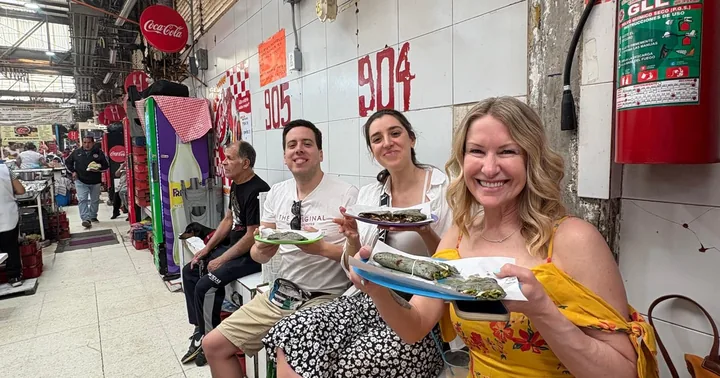
The market-and-tasting option below is a genuinely different day: 3.5 hours total, but only one hour of that is on the water. It meets at the Catedral de Xochimilco in the town rather than at a dock, caps the group at eight, and walks you through quesadillas, tacos and tlacoyos with vegetarian options. It rates 5.0 — from 15 reviews, which is not the same claim as 4.9 from 631, and I will keep saying so every time it comes up. Hotel pickup and gratuities are excluded.
The quiet version
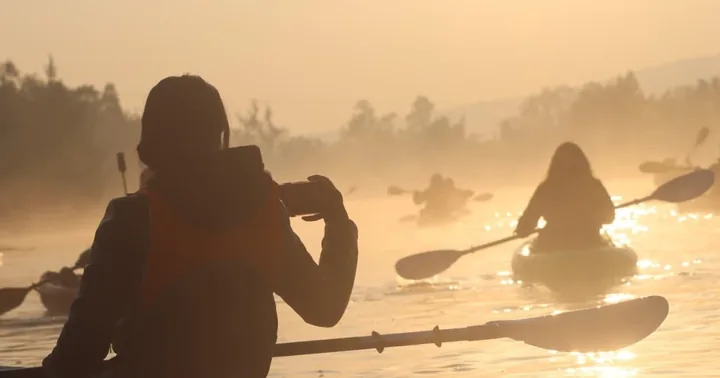
If you have read the party-boat reviews and want the opposite, the kayak option runs 2.5 to 3.5 hours at sunrise or sunset and includes a coffee break and a stop at a ranch. It is not a trajinera. It rates 4.8 off 57 reviews, which is thin. No meeting point was published, so I cannot name the dock.
Off the water: Coyoacán and Frida Kahlo
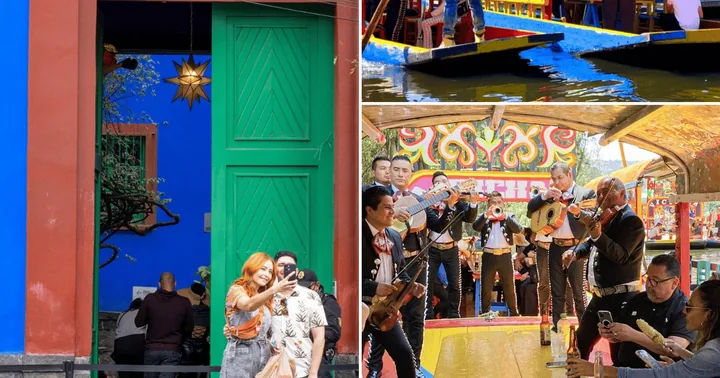
Xochimilco and Coyoacán are the standard pairing for a day out of the centre, and two products here do it. Read the fine print on both, because it is where the difference sits.
- The nine-to-ten-hour day includes transport to and from the meeting point in the historic centre, a certified guide, the boat and Coyoacán — but the Frida Kahlo Museum, Casa Kahlo and lunch are included only if you select that option. It has 3,894 reviews, more than the other seven products on this site combined, at 4.4, the second-lowest rating here. Both of those are true at once.
- The five-hour version meets at central hotels and includes pickup from the meeting point and admission fees. It explicitly excludes hotel pickup — the operator lists the two separately, and they are not the same thing. At 4.0 from 357 reviews it is the lowest-rated product on this site, which is why its card says so.
 Most reviewedTransport from the city included
CDMX: Xochimilco, Coyoacán with Frida Kahlo & Optional Lunch
 Lowest rated herePickup from meeting point
Xochimilco & Colonial Coyoacán Trip
The ecological docks and the park
Two of the docks are classified ecological rather than traditional, and they are a different kind of trip. Cuemanco, opened in 1993 inside the ecological park, publishes seven routes of one to five hours and has a plant market; it was rehabilitated and reopened in 2026. Fernando Celada Miranda runs guided environmental tours into the protected zone and seasonal night “Lunadas” from 20:00 to 22:00. The Parque Ecológico de Xochimilco covers 165 hectares and is officially described as offering the most pristine and naturalistic of the rides, with birdlife and axolotls. Details and boat counts on which embarcadero to leave from; the wildlife itself is on the axolotl page.
Two dates worth knowing, and one I am not going to invent
- La Flor Más Bella del Ejido, 22–29 March 2026, the 239th edition, free entry, with 1.5 million visitors expected — announced by Mayor Circe Camacho. The “239th” implies a very old event, but no source confirms a founding date, so I am not giving you one.
- La Llorona en Cuemanco, at Embarcadero Cuemanco, Friday to Sunday at 18:00 and 21:00, MX$750 per person including the trajinera and the show, bilingual. The official site gives 2 October to 22 November 2026; two other outlets give 31 May to 22 November. I am citing the official window and telling you about the disagreement. It does not run in August.
- Día de Muertos 2026 has not been announced. The borough normally publishes in late September or October. Any listing you find now for this year is somebody guessing, and there is nothing here for me to publish yet.
For timing the visit itself, see the best day to go and opening hours and boat times. If the honest question underneath yours is whether the whole thing is a set-up, that is here.
Frequently asked questions
What do people actually do in Xochimilco?
Hire a trajinera and spend one to several hours on the canals, eat and drink aboard, hire mariachi by the song at MX$300, and pass through a working agricultural landscape of chinampa fields. Off the water there are markets at the bigger docks, the ecological park at Cuemanco, and Coyoacán with the Frida Kahlo museums as the usual pairing.
Is there food in Xochimilco?
Yes, and much of it comes to the boat. Smaller boats sell antojitos on the canals; the 2024 tariff act set antojitos at MX$130 and mariachi at MX$300 a song. You may also bring your own food and drink aboard at no surcharge — being charged extra for that is a documented scam and is reportable at the attention modules at the docks.
Are the floating gardens really floating?
No. The chinampas are artificial platforms raised from lakebed mud and anchored, edged with ahuejote willows whose roots hold the banks. “Floating gardens” is the tourist name, not the mechanism. The FAO recognized the system as a Globally Important Agricultural Heritage System in 2017.
Are the chinampas still farmed?
Yes, though less than they were. The FAO’s 2019 figures identified about 20,922 chinampas with 3,586 actively producing — roughly 17% — growing 19,213 tonnes of food a year plus 23 to 24 million ornamental plants.